Why didn't you just ask?
by Alan Blake
on February 23, 2021
Soutenez le parc coopératif de Tanglewood dans le rétablissement de la sécurité communautaire !
Ask board members of resident-owned communities, “What is your biggest challenge?” and sure to be among top responses will be, “Getting people to volunteer!”
Nonprofits rely heavily on volunteers to meet their mission—especially nonprofits like ROCs, which have no staff. Running a ROC is a lot of work, typically more than can be accomplished effectively by a five-member volunteer board. Non-board volunteer contributions can lighten the load, invigorate the board and membership, and dramatically improve your community’s sustainability.
Best of all, volunteers at ROCs have a vested interest, because they live in the community that will reap the benefits of their work!
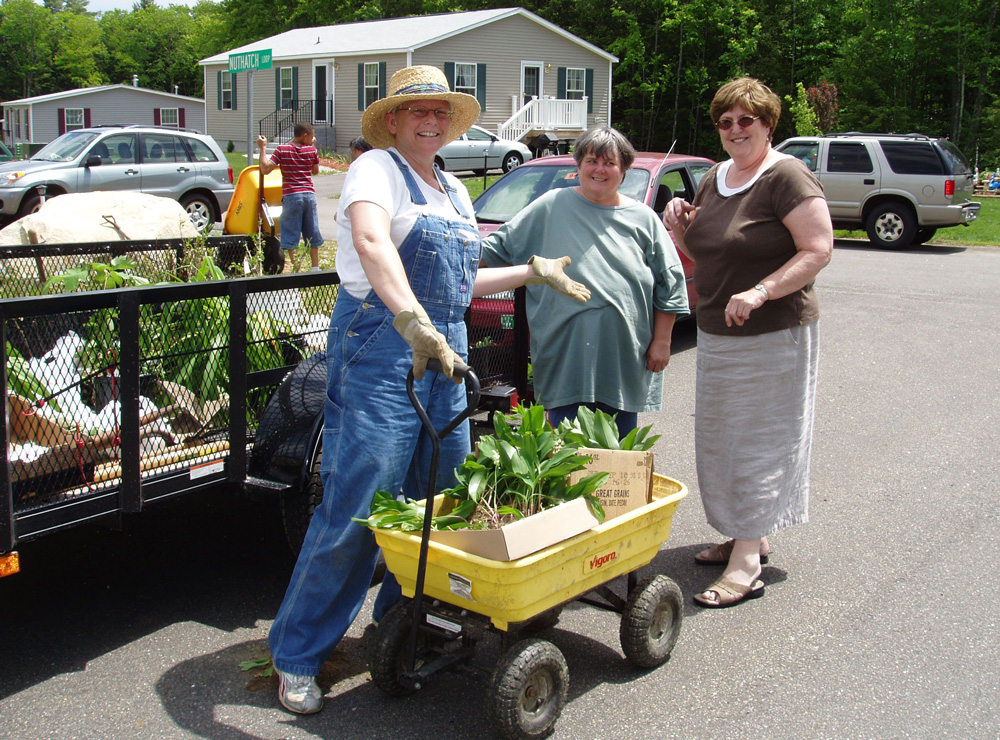
How to find these generous people who give freely of their time, energy, and expertise?
This may seem obvious, but you may be surprised how many people don’t know that their help is needed and welcome. Most people are busy managing their own lives and probably assume that if no one is asking, their help isn’t needed. Communicate regularly to make people aware of the need and the opportunities to assist:
Don’t forget to ask one-on-one. You may have supporters who would love to participate if they only knew their skills, knowledge, ideas, and handiwork were welcome.
Asking someone to volunteer is like asking someone for a favor—they’re probably a little wary until they hear the details. So, a general shout out for “volunteers” (basically, to work for no money) is likely to go unanswered.
Instead, ask people to do something specific: Join a membership, finance, or social committee; plant flowers at the community center; plan a co-op-wide yard sale; set up for annual meeting. Specific requests let volunteers know exactly what you’re looking for, and the level of commitment they are making.
You know why your co-op needs volunteers. Why do they need you? Why should someone give their time to your co-op?
The benefits to the community shouldn’t be the central story of your volunteer recruitment efforts. “We need help!” may be true, but it doesn’t make the most compelling case for volunteering. Instead, focus on what volunteers gain by giving their time. Things like:
Focus on the opportunities to make a difference, get outside, have fun, improve the community – all benefits to the volunteers.
Is it easy to volunteer in your community? Are there clear steps to take? Are the people you encounter friendly and helpful?
Make sure you aren’t offending or otherwise giving prospective volunteers a negative experience. Don’t underestimate the power of a form that won’t load on the volunteer’s computer or phone, an unreturned phone call or email, or a cranky committee member to turn off a volunteer forever. Sound dramatic? It happens.
When someone expresses an interest in volunteering with you, follow up quickly, even if it’s just to say, “Thanks, we’ll get back to you soon.” You want them to know how much you value their interest, so don’t leave them hanging.
Some volunteers will be ready to take on the equivalent of a part-time job, while others will do something once a month, or a couple times a year. Maximize the number of volunteers you can appeal to by providing opportunities at different time and commitment levels
You can seek someone to update your ROC’s Facebook page or clean the community center, join a committee or set up chairs at annual meeting, investigate a refinance or solicit snow-plowing bids . . . there are so many options. Make it clear that you have opportunities for different levels of commitment. This helps people understand that they can be as involved as they want to be. If someone has a positive experience doing a small volunteer assignment for your co-op, they may consider getting more involved in the future.
So, remember…
Once you’ve recruited a new volunteer, you’ll need to manage and retain them. Welcome your volunteers, make sure someone is appointed to check in and engage with them regularly, and be sure to thank them—often.
People love to share their knowledge, skills, and talents. Give ‘em a chance!
Alan Blake is a ROC-NH™ Organizational Trainer.
ROC-NH™ is a program of the New Hampshire Community Loan Fund, Inc. and aROC USA® Certified Technical Assistance Provider.
ROC-NH is a registered service mark of ROC USA, LLC.